Boards & adhesives
Choose boards that release less formaldehyde and adhesives with lower emissions. Check the product details and any available emissions test results before choosing them for your home.

Sustainable interiors
Keeping flooring, cabinets, and furniture that still serve you reduces waste and the need for replacements. When you buy something new, consider how long it will last, how it can be repaired, and what it is made from.
Image: interior design concept.
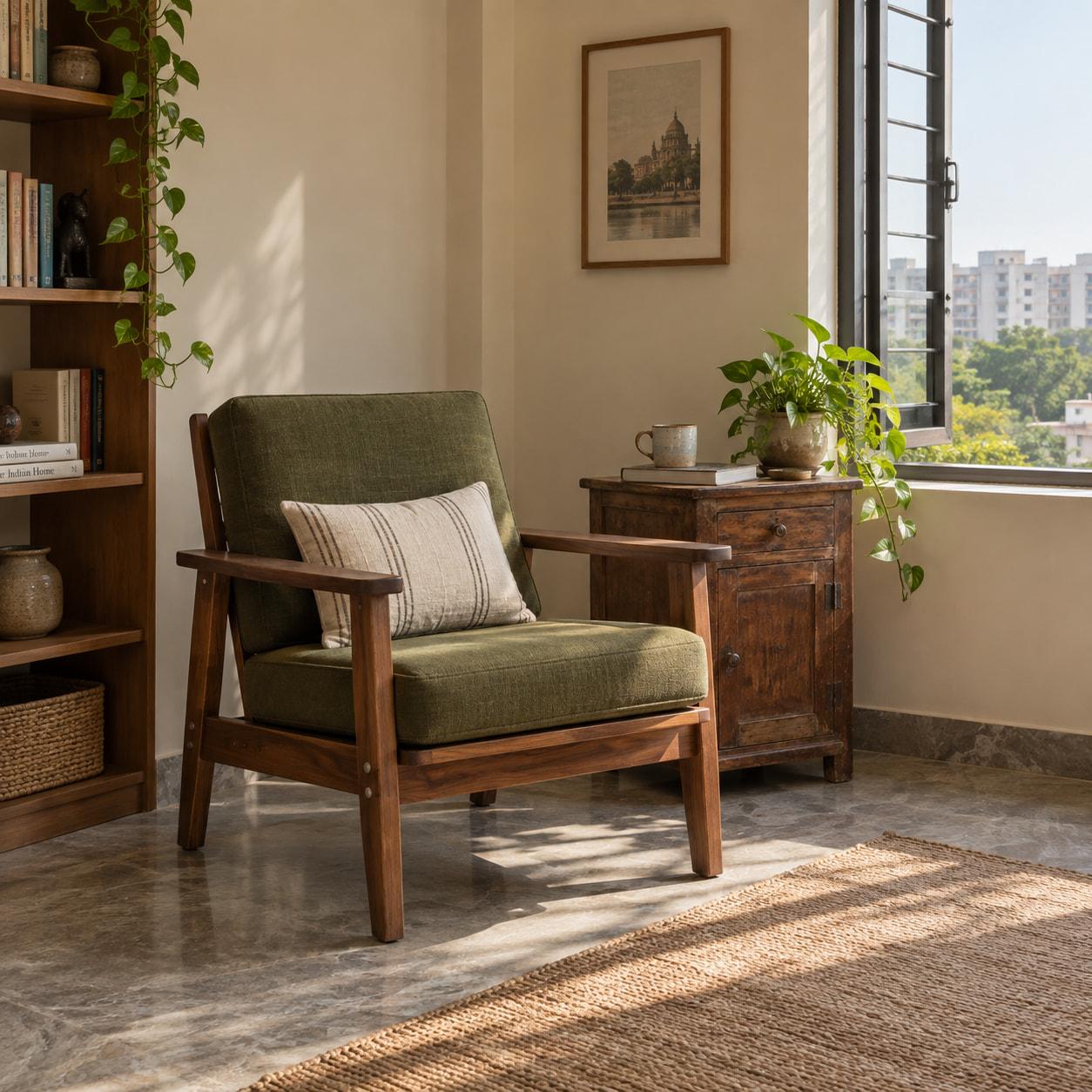
Flooring in good condition, a useful wardrobe, or a table that can be repaired may still suit your home. Before suggesting replacements, we check their condition, how they fit, and how you use them.
Materials
Check what a product is made from, how it is installed, how it handles moisture, and how it can be maintained or repaired. Looking natural does not tell you its environmental impact or what it releases into indoor air.
Choose boards that release less formaldehyde and adhesives with lower emissions. Check the product details and any available emissions test results before choosing them for your home.
Consider paints low in volatile organic compounds (VOCs), mineral finishes, and lime or clay plasters where suitable. Choose a finish that works with the surface underneath, the moisture it may face, and how it will be cleaned.
Choose well-made furniture with fittings that are easy to reach, upholstery that can be replaced, and fabrics suited to daily use. Check where materials come from and how to care for them.
Follow the manufacturer’s instructions for drying, curing, and ventilation. Leave room to reach parts that need maintenance, and keep product details and care instructions for future repairs.
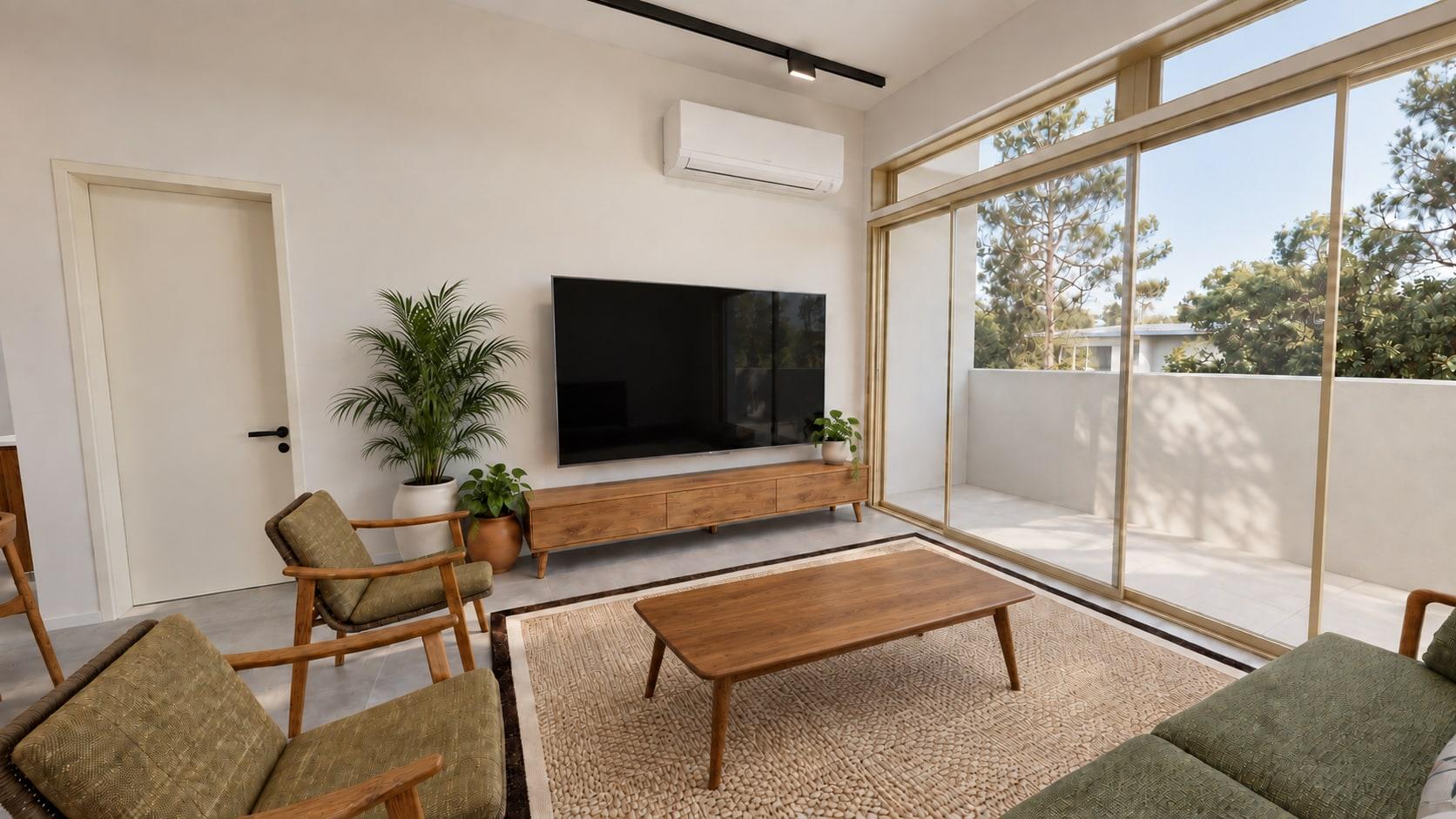
In an apartment, window positions, plumbing, and ventilation systems are often fixed. Keep furniture clear of opening windows, use curtains to manage glare, and place lights where daylight is not enough.
Place seating and work areas where the light suits what you do. Leave room to open windows, reach switches, and move around furniture.
Technology
Use efficient LED lights to light the room and focused lights for reading or cooking. Position them to avoid glare, and choose dimming where you want to adjust the brightness.
Use timers when you want equipment to follow a schedule, or occupancy sensors when lights should respond to someone entering the room. Keep manual controls easy to use and check how the system will be maintained.
Plan lighting, fans, cooling controls, and any energy monitoring together. Keep fittings and equipment easy to reach for cleaning, repairs, and replacement.
Free designs
Use our sustainable design guides with your own designer or contractor. There is no obligation to hire Earth & Abode.