Choose furniture you can repair and storage you can move. Before adding built-in cabinets, wall panelling, or a false ceiling, consider what you need and how those additions will be maintained.
By Earth & Abode StudioUpdated 9 minute read
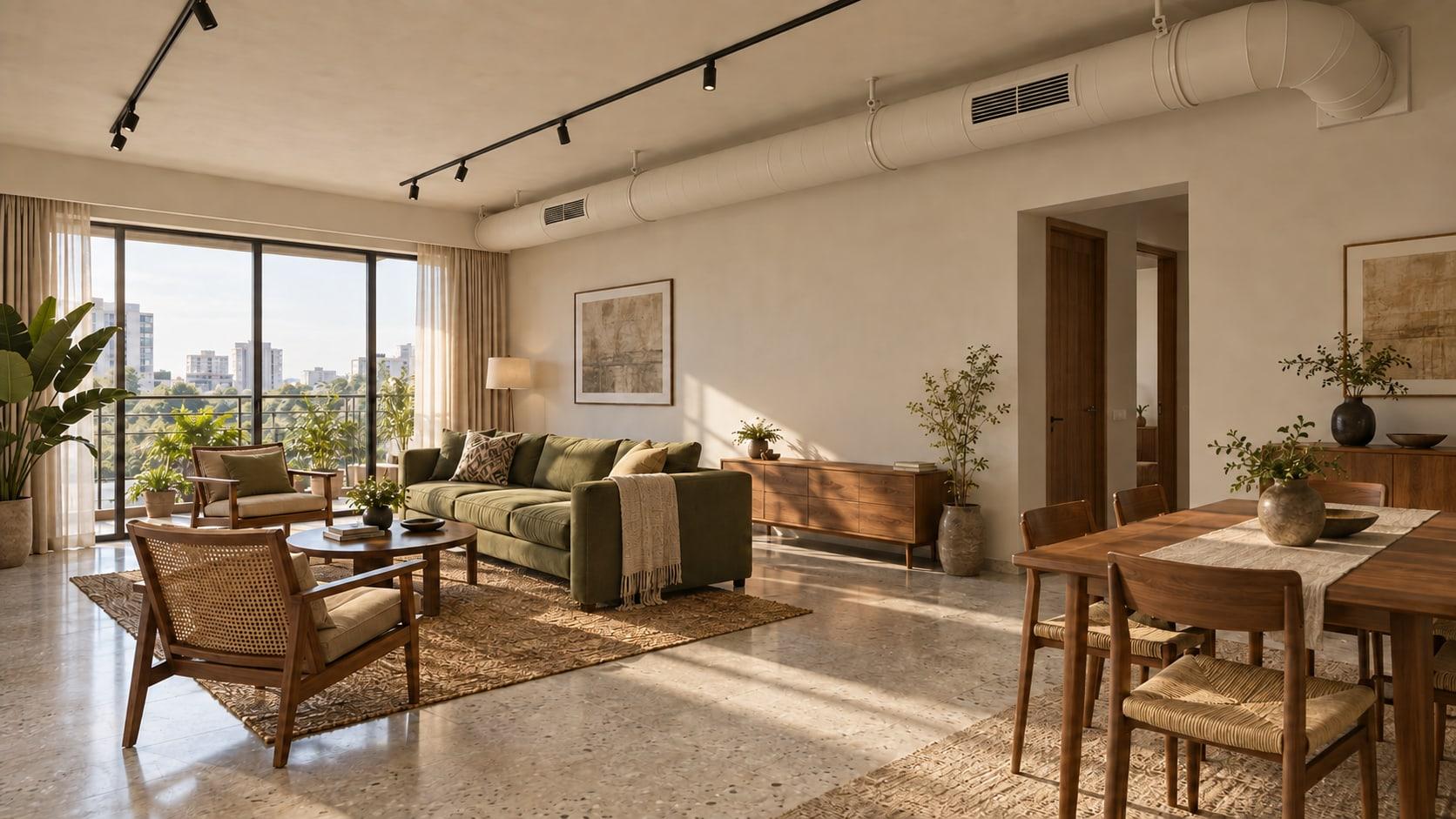
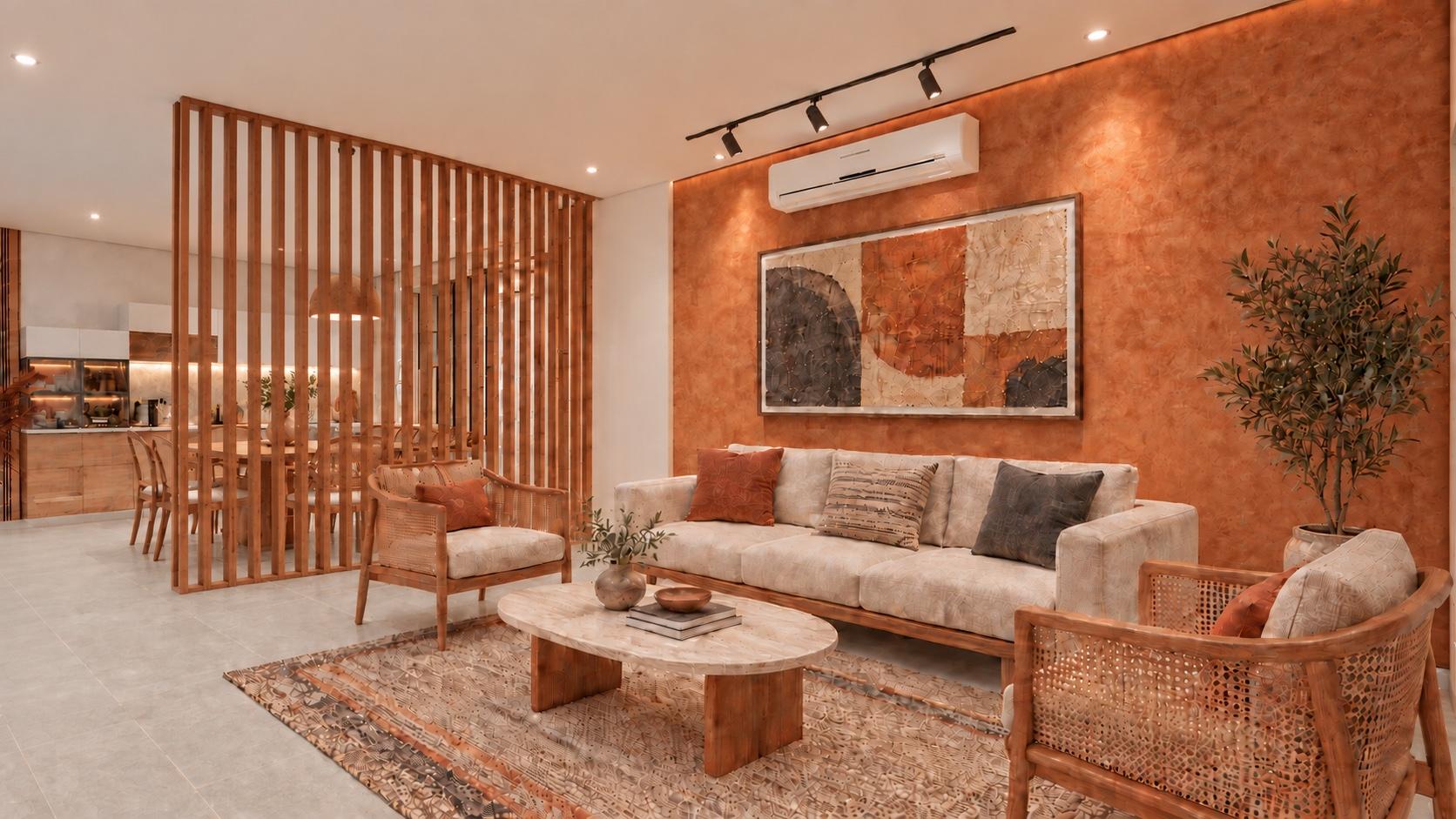
Design concept · AI-generated visualisationColour-matched exposed ducts, black ceiling tracks, and freestanding timber furniture make a warm, welcoming room without a false ceiling or decorative wall panelling.
Furniture may need a new hinge, fresh upholstery, or a different place in the room as the years pass. Choosing pieces that can be repaired and moved makes those changes easier. Built-in cabinets, false ceilings, and wall panels use additional materials and can be harder to alter, so it helps to decide which ones you need.
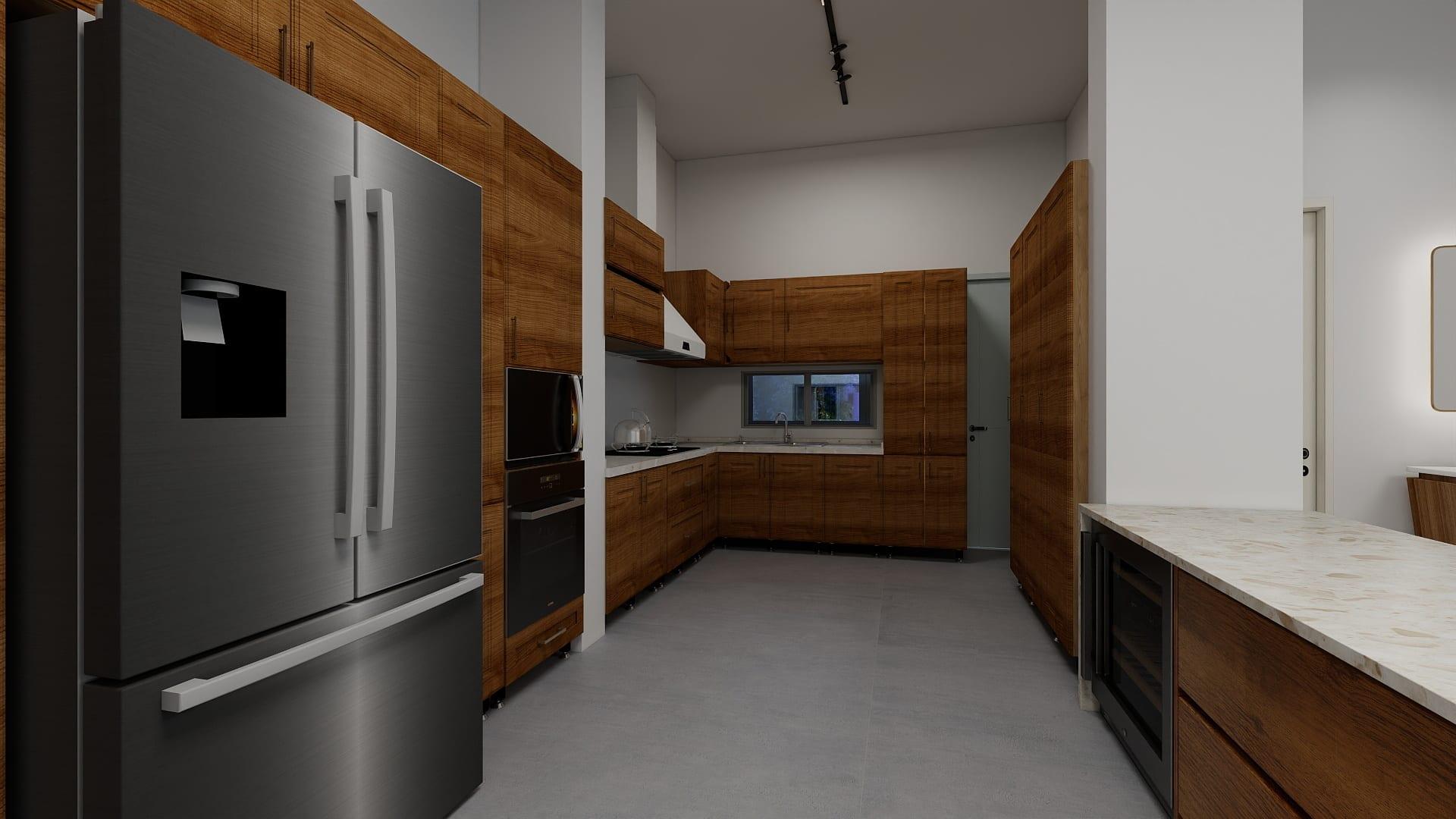
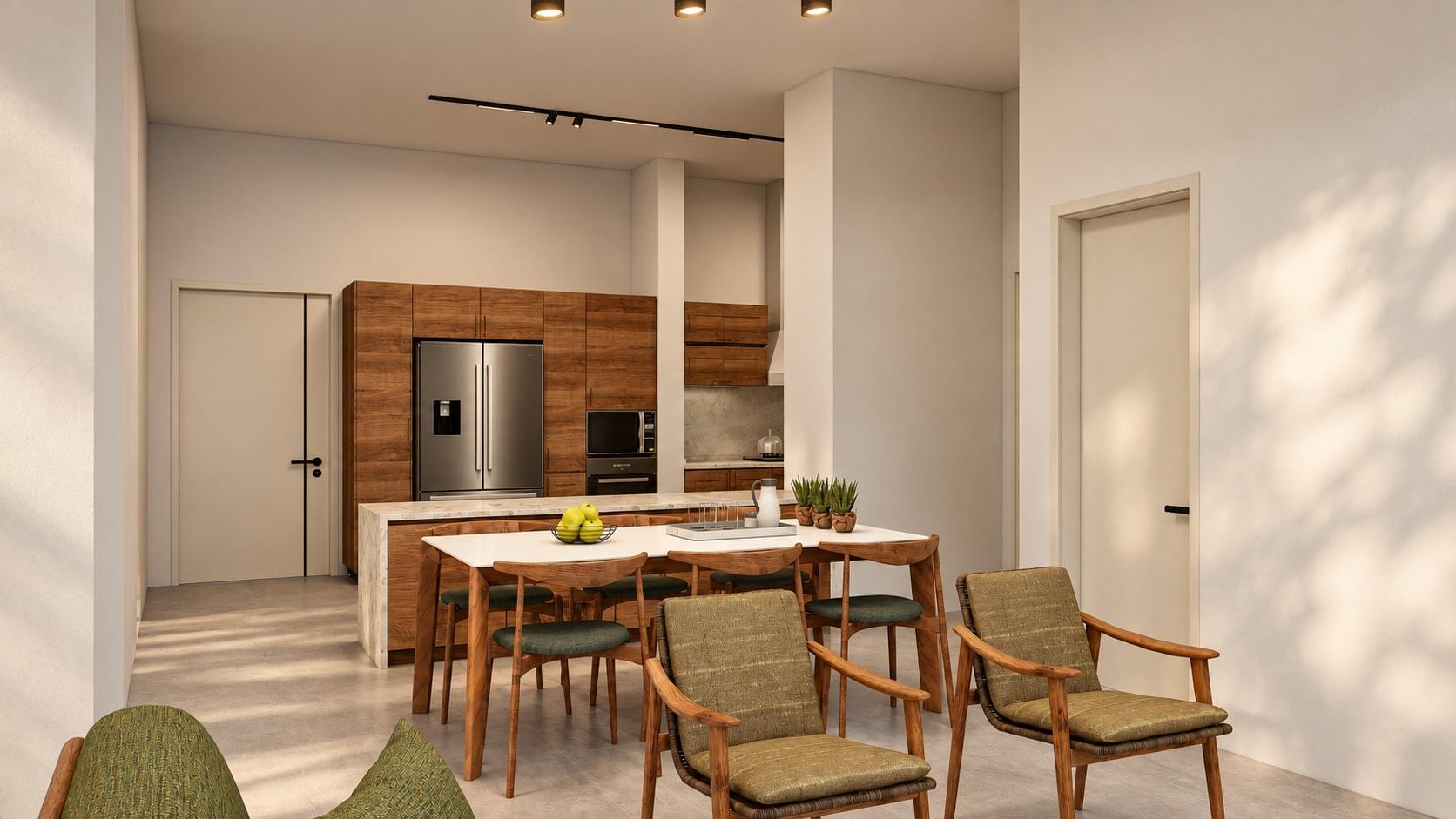
The opening image is an AI-generated concept illustrating exposed services and movable furniture. The TV comparison and kitchen visualisations revisit our apartment proposal, A better plan for everyday life, with its removable, standard-size kitchen and wardrobe modules.
01 / Question the addition
Give every addition a reason.
A renovation brief can quickly become a list of things to build: a TV wall, a dropped ceiling, more cupboards, another decorative surface. Before adding them to the plan, ask: what problem does each one solve? A painted wall may already give you the appearance you want. Add panelling if you value what it brings enough to justify its cost and maintenance. Retaining useful things and reducing unnecessary material use belong at the start of the whole-life approach to materials.
Start with what works. Flooring in good condition, a table with a loose joint, or a wardrobe that needs new hinges may be worth keeping or repairing. Every replacement has to be made, transported, and installed, and will eventually need to be disposed of. Choose materials for the conditions in your home, including moisture and termite exposure. If you expect to move, check whether the furniture can be dismantled and reassembled, and whether local tradespeople can repair it.
02 / Make room for change
Durable furniture and movable storage leave room for change.
Build storage around what you actually need to store. Built-in cabinets can make use of an awkward recess, but they tie the storage to one layout. Units bonded to walls or enclosed behind finishes can be difficult to remove intact. Units with accessible fixings and replaceable parts can be easier to repair. Separate units can also give you more options for rearranging storage.
Ask how it comes apart: look for accessible screws, separate worktops, and replaceable hardware. Check whether replacement doors and fittings use the same dimensions and fixing pattern; the word “standard” can mean different things across manufacturers. Keep the drawings for the next installation, including wall fixings, plumbing, and electrical connections, and include dismantling and reassembly in a moving quote.
Does a television need an entire wall built around it?
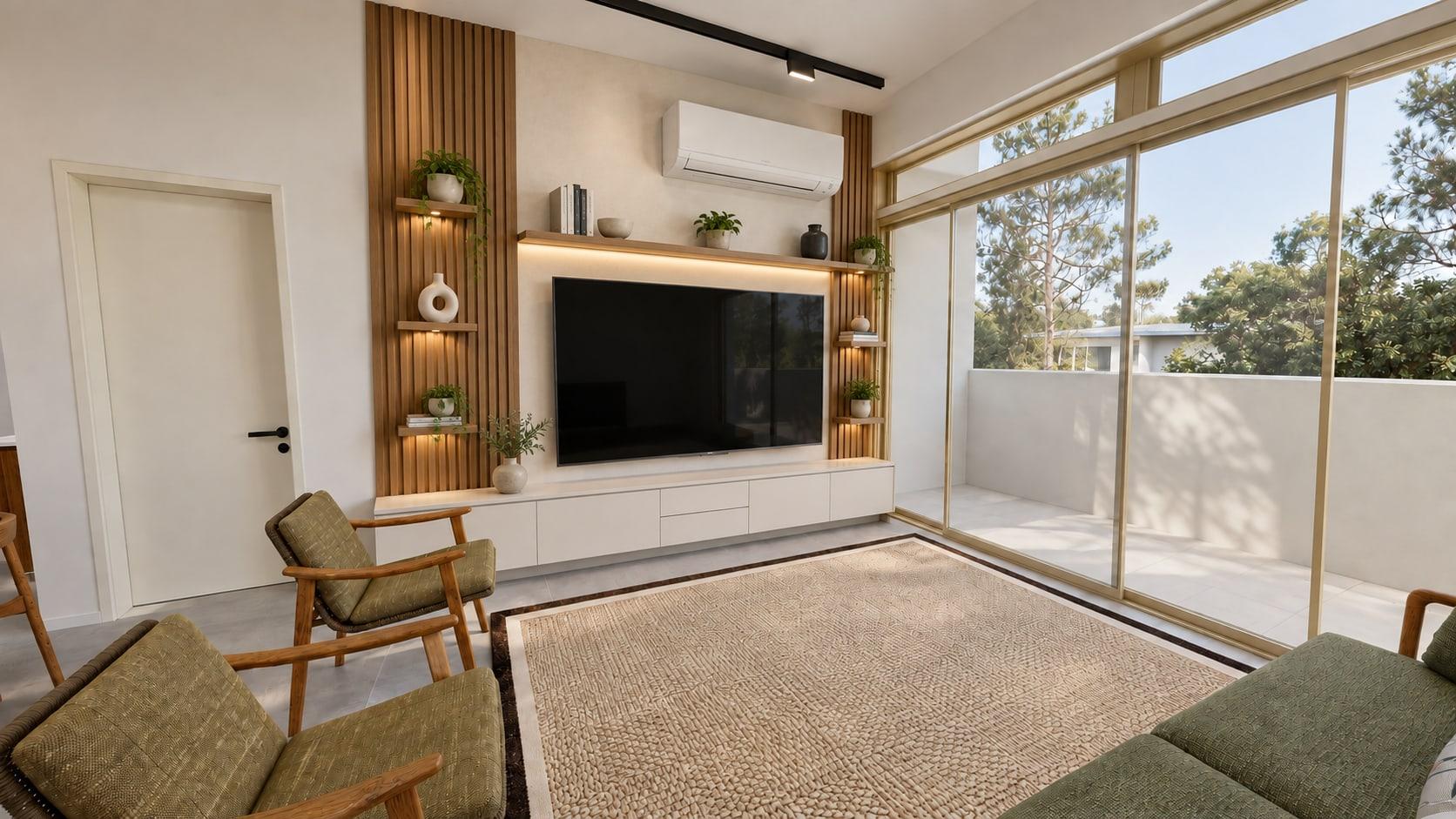
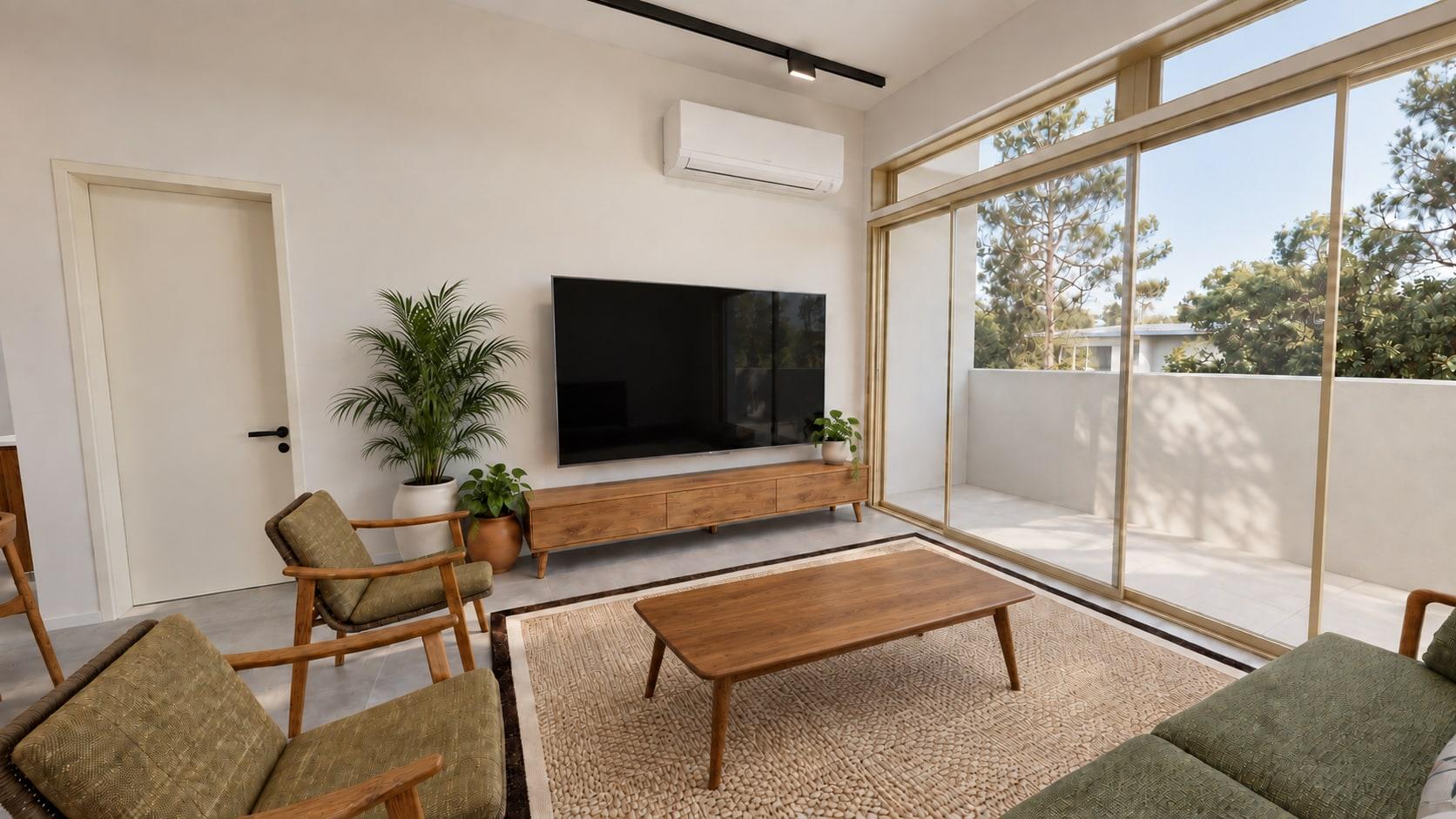
Compare the two designs in the same room, from the same viewpoint. One builds a feature around the TV; the other pairs a plain wall with a freestanding timber console, plants, and a wooden coffee table.
Decorative TV wall · AI-generated visualisation
Panelling, display shelves, and fitted cabinets frame the TV. Design adapted from a Pinterest reference.
Simple TV unit · AI-generated visualisation
A plain wall, freestanding console, plants, and a mid-century wooden coffee table give the room warmth, with furniture that can move independently.
Before commissioning the TV wall, ask yourself:
Do I clearly prefer the TV wall to the simpler arrangement?
Am I sure I will want the TV on this wall, even if I rearrange the room?
Will its finishes and proportions work with furniture I might buy in the future?
If you cannot say yes to all three, save your money and try the simpler solution first. You can revisit the TV wall after living with the room.
03 / Choose for the conditions
Durable cabinets: wood or stainless steel?
Solid wood expands and shrinks with humidity; unsuitable drying or detailing can cause warping. It can often be sanded, refinished, or repaired at a joint. Plywood’s layers improve dimensional stability, but veneer quality, bonding, and exposure matter. Moisture can still damage edges or cause delamination.
MDF (medium-density fibreboard) and particleboard provide consistent surfaces, but wetting can cause swelling that a new finish cannot undo. Moisture-resistant grades are not waterproof. Wood-based products can be vulnerable to termites; species, treatment, installation, and site conditions matter. Repairability also depends on veneer thickness and the extent of damage. The USDA Wood Handbook explains these differences in moisture behaviour and deterioration.
SS 304 stainless-steel cabinetry is not food for termites and does not swell like wood-based board. It can suit damp-prone locations, but scratches, dents, noisy thin panels, poor welds, and difficult-to-replace fittings deserve attention. Stainless steel can corrode: chlorides, trapped deposits, and the exposure environment affect grade selection and care, as World Stainless explains.
Check the whole cabinet: vulnerable backing or irreplaceable hinges can shorten its life. Maintain wood coatings before moisture enters damaged areas; thin veneer offers less scope for sanding. Steel can be cleaned or professionally refinished, but deep dents can be difficult to remove.
Steel production uses energy and raw materials; wood products also have environmental costs, from harvesting and processing the wood to making the adhesives that hold boards together. Buying either for cupboards you do not need adds those impacts without solving a storage problem. Decide how much cabinetry the room needs before debating what to make it from.
Proposed design · VisualisationRemovable, standard-size modules organise the kitchen around cooking, storage, and access. The wood-toned finish shown here does not tell you what the cabinet boxes are made from; that material still needs to be chosen.
04 / Design what stays visible
A ceiling need not conceal everything.
Lighting is often treated as a reason to build another ceiling. Start by asking whether surface-mounted fittings can do the job. A plain ceiling with well-positioned tracks can look complete while avoiding extra framing, boards, joints, and paint. The tracks give the room a clear line; their fittings can direct light where it is useful.
The concept below takes that idea further. Exposed air-conditioning ducts are painted the same warm off-white as the walls and ceiling. Their curves and joints remain visible in soft shadow, while black tracks provide a deliberate contrast. Timber furniture and soft upholstery give the industrial elements warmth. The ducts and lighting become part of the design, arranged with the same care as the furniture.
Plan the routes for ducts, wiring, and pipes as carefully as the furniture layout. Align tracks, plan duct turns, and leave room to reach fittings and clean upper surfaces. A false ceiling may be needed to improve acoustics or accommodate pipes, ducts, and wiring. Where these can safely remain visible, plan how they will look and how they will be cleaned and maintained.
Ask the installer to choose an outer surface or casing that can be painted while retaining the insulation and vapour control needed to prevent condensation. Keep grilles, access panels, and required markings clear. The EPA’s moisture-control guidance explains how to manage moisture around cold services.
Illustrative concept · AI-generated visualisationColour-matched ducts recede into the room while black tracks give the ceiling definition. Visible services can be part of a warm, modern interior.
05 / Look behind the finish
What finishes release into indoor air.
The binders in wood-based boards, along with finishes, adhesives, paints, and sealants, can release pollutants into indoor air. Every decorative layer may introduce another adhesive or finish into the room. Ask for product-specific emissions tests and plan for ventilation while products are installed and their finishes dry and cure. EPA guidance on formaldehyde explains the role of some pressed-wood products.
A concealed leak is harder to notice and reach. Behind a fixed cabinet or above a ceiling, persistent moisture can allow mould to develop before a stain appears in the room. Keep plumbing and air-conditioning equipment accessible for inspection and repair; if a leak occurs, repair it and dry the affected materials. The EPA’s hidden-mould guidance describes these concealed problem areas.
06 / Choose a floor you can care for
Keep the floor that still works.
Check whether cleaning, local repairs, or refinishing could bring the existing floor back into use. Keeping it can avoid the waste and new materials involved in replacement. If replacement is needed, compare how the options are made, transported, installed, and maintained; each stage contributes to their environmental impact.
Flooring: care, repair, and replacement
Material
What to consider over its life
Other natural stones
Locally available Kota limestone, granite, or slate may reduce transport distances. Porosity and finish vary; some stain or react to acids. Suitable stone can be honed or refinished, but repairs and replacement slabs may not match. Check stone-specific installation and sealing needs.
Marble — a natural stone
Can be repolished, but acidic spills can etch it and porous varieties can stain. Sealers improve stain resistance; they do not prevent acid etching. Allow for appropriate bedding, care, and specialist restoration.
Ceramic and vitrified / porcelain tiles
Porcelain has low water absorption, but grout and the whole installation still need care. Glazed surfaces are generally cleaned rather than refinished. Individual tiles can be replaced if accessible; keep labelled spares. A firm, well-prepared base, the right adhesive, and joints that allow for movement all matter.
Cement-based terrazzo
Can often be ground and repolished. Porosity calls for appropriate sealing and cleaning; acids can damage cement and marble aggregate. Cracks and repairs may remain visible. Substrate preparation, joints, curing, and matching aggregate affect the result.
Epoxy terrazzo
A resin binder allows different installation build-ups and designs. Specialist refinishing and patching may be possible, with imperfect colour matches. Check slab moisture limits, substrate preparation, installation emissions, and suitability for the intended exposure.
For bathrooms, check the finish’s slip performance when wet. Ask which sealers and cleaners preserve that finish, and keep their details with any spare tiles.
07 / Read beyond the label
Let the wall be a wall.
When choosing paint or plaster, check what the wall is made from, whether it is damp, and how often the surface will need cleaning. These conditions determine which finishes are suitable. Compare maintenance needs and emissions information as well as colour and texture.
Paint and finish families: useful distinctions
Finish
Where it works, and its trade-offs
Limewash / mineral finishes
Some mineral surfaces suit finishes that let moisture vapour pass through. Limewash may need periodic renewal and can mark or chalk. Existing sealed coatings may need removal or a compatible system, so check the preparation involved before choosing this finish.
Acrylic emulsions
Acrylic describes the binder; many acrylic paints are water-based emulsions. Common on prepared plaster and masonry. Compare washability and vapour permeability in the product data. Usually straightforward to repaint after cleaning, repair, and preparation.
Other water-based emulsions
Vinyl and mixed-binder products offer different price and performance levels. Check scrub resistance, damp-area suitability, and substrate compatibility. Recoat with a compatible system; the word “emulsion” alone says little about emissions or service life.
Solvent-based enamels
Can suit wood or metal surfaces when used with the correct primer. Tough finishes may require sanding and careful preparation when renewed. Solvents and curing need attention; compare a suitable water-based alternative and follow ventilation and safety instructions.
Repair the source of damp before repainting, and choose a finish compatible with the existing wall. Historic England’s redecoration guidance explains why vapour-permeable finishes matter on traditional substrates. For indoor air quality, ask for emissions information alongside the paint’s volatile organic compound (VOC) content. Labels such as “natural”, “low odour”, and “zero VOC” leave out parts of that picture; EPA explains the limits of VOC labelling.
08 / Make reuse possible
Leave room for a second life.
Furniture can remain in good condition long after tastes change. Where practical, renew the finish, replace worn fittings, or repair a damaged section instead of replacing the whole piece. Good access, spare parts, and local repair skills make that choice practical.
Design for the next owner, too. A freestanding timber console can be photographed, sold, and carried into another home. A cabinet made to fit one alcove can be harder to remove, transport, and fit into another home. Practical dimensions and fixings that are easy to reach make it easier to sell the piece intact. Scrap recovery comes later, when the object can no longer serve a purpose and its materials become the remaining source of value.
Replace the worn part when you can: a worn hinge should call for a new hinge, not a new wardrobe. Before ordering, ask the maker how you would replace a damaged door, renew the finish, or obtain matching hardware. Those answers help you judge whether a small repair will be possible when a part wears out.
Before buying something you need, ask five questions:
Can it be repaired?
Can it be dismantled?
Can it be moved?
Can it be refinished?
Can it be sold or reused?
Choose built-in work where it solves a storage or layout problem. Elsewhere, freestanding furniture and simple finishes may give you the look you want while making future repairs and changes easier.
Minimalist living room design for an Indian home: arrange furniture, leave space to move and use light thoughtfully while keeping the objects that give a room meaning.